Long Son Pagoda in Nha Trang stands as one of the city’s most iconic spiritual landmarks, welcoming both devout pilgrims and curious travelers from around the world. Famous for its towering white Buddha statue and serene atmosphere, this temple is more than just a place of worship—it’s a cultural treasure with over a century of history. Whether you’re seeking peace, history, or simply a memorable photo opportunity, Long Son Pagoda offers an unforgettable experience.
Có thể bạn quan tâm: Huỷ Vé Máy Bay Bamboo Có Được Hoàn Tiền Không?
Why Long Son Pagoda is a Must-Visit Destination
Long Son Pagoda, also known as the White Buddha Pagoda or Dang Long Tu, is nestled at the foot of Trai Thuy Mountain in Phuong Son Ward, Nha Trang City. Its unique blend of natural beauty, architectural elegance, and spiritual significance makes it one of Vietnam’s most revered temples. Recognized in the Vietnamese Guinness Records for its massive outdoor Buddha statue, the pagoda attracts thousands of visitors each year who come to admire its grandeur and soak in its tranquil energy.
The temple’s history dates back to 1886 when it was first established by Venerable Thich Ngo Tri as a modest thatched house on the hilltop. Over the decades, it has undergone several transformations due to natural disasters and war damage, but each restoration has only added to its resilience and charm. Today, it stands as a symbol of enduring faith and cultural heritage.
A Brief History of Long Son Pagoda
The story of Long Son Pagoda begins in the late 19th century, during a time when Nha Trang was still a quiet coastal town. Founded by Venerable Thich Ngo Tri in 1886, the original structure was a simple thatched-roof temple perched on the hilltop. For nearly half a century, it served as a quiet retreat for meditation and prayer.
In 1936, the pagoda was entrusted to the An Nam Buddhist Association of Central Vietnam, marking the beginning of its formal development as a center for Buddhist practice and teaching. It was honored with the title “Sac Tu Long Son Tu” in 1935, a recognition of its growing importance in the region.
However, the pagoda’s journey was not without challenges. A severe storm in 1990 caused significant damage, prompting the Venerable to relocate the temple to the foot of the mountain and rename it Long Son. The temple also suffered destruction during the war in 1968, when its roof tiles were destroyed. Subsequent restorations in 1971 and 1975 helped rebuild and preserve its sacred space, leading to the magnificent structure we see today.
Exploring the Architecture and Design
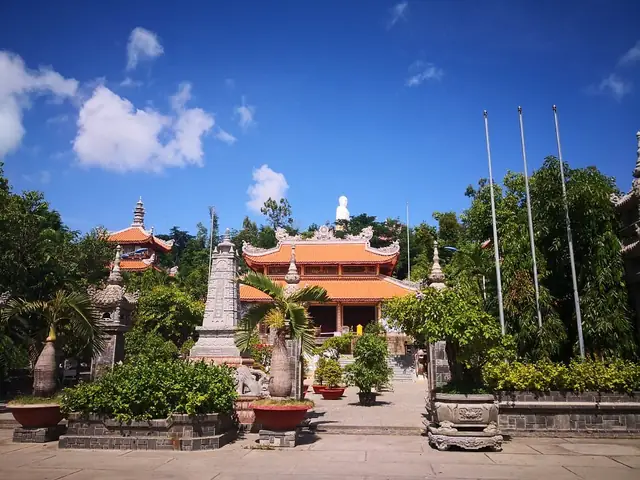
Long Son Pagoda spans over 3,000 square meters and is designed to harmonize with its natural surroundings. The temple grounds are shaded by large trees, creating a cool and peaceful atmosphere perfect for reflection. As you enter, you’ll notice the intricate details that adorn the pagoda, from the carved stone towers to the elegant lamp posts and bas-reliefs.
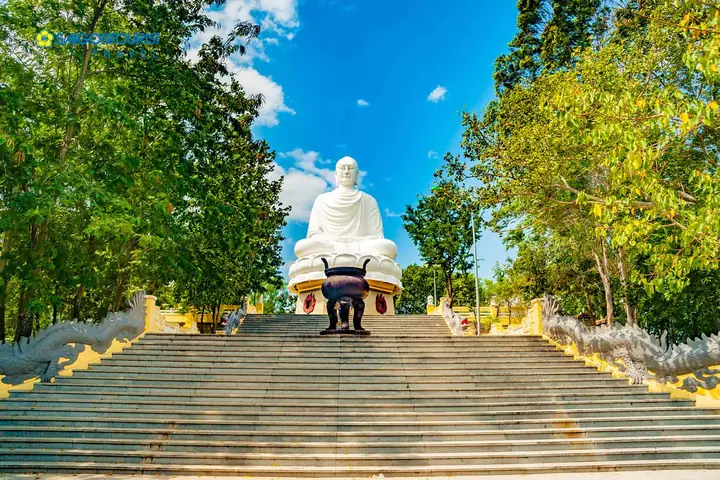
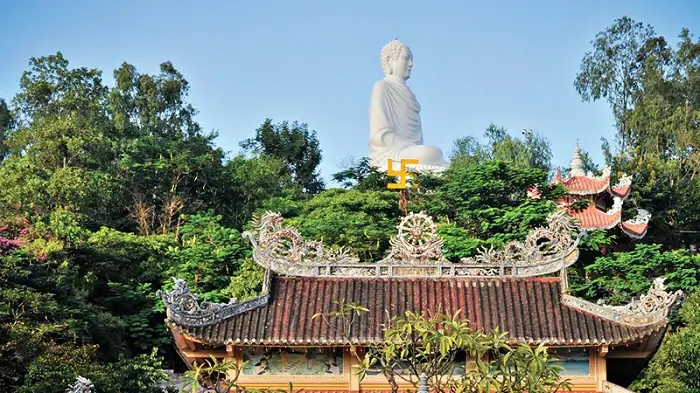
One of the most striking features of the pagoda is the staircase leading to the main hall. Flanked by two rows of steps, the central path is adorned with a stunning ceramic mosaic featuring a dragon’s face and the Chinese character “Vạn,” symbolizing good fortune. This artistic touch sets the tone for the spiritual journey that awaits visitors.
Có thể bạn quan tâm: Lịch Sử Ngày 20/10 Ngắn Gọn: Ý Nghĩa Và Truyền Thống Của Ngày Phụ Nữ Việt Nam
The Main Hall: A Sanctuary of Serenity
The main hall of Long Son Pagoda is a space of profound beauty and reverence. Inside, you’ll find several large bronze Buddha statues, each weighing over 700 kg and standing nearly 2 meters tall. At the center of the hall is a solemn statue of Buddha in a teaching pose, radiating wisdom and compassion.
Two giant candles, standing 3.4 meters tall and weighing 900 kg, flank the central statue. These candles are intricately carved with motifs of dragons and lotus flowers, symbolizing purity and enlightenment. They hold the record for being the largest in Vietnam, adding to the pagoda’s list of remarkable features.
The Reclining Buddha: A Symbol of Peace
To the right of the main hall, a staircase leads up the hill, offering a scenic climb through the temple grounds. At the 44th step, you’ll encounter the Reclining Buddha statue, a masterpiece of Buddhist art. Measuring 5 meters in height and 7 meters in length, this statue depicts Buddha in a state of serene repose, symbolizing his passing into Nirvana.
Behind the Reclining Buddha is a bas-relief of 49 disciples, their hands clasped in prayer. This artistic representation captures a moment of deep reverence and spiritual transition, making it a powerful sight for visitors.
The Great Bell and the White Buddha
Continuing up the hill, you’ll reach the Great Bell, which weighs 1,500 kilograms. This bell is not only a functional element of the temple but also a symbol of its enduring presence. The sound of the bell is said to purify the mind and bring peace to those who hear it.
At the summit of the hill stands the most iconic feature of Long Son Pagoda: the Kim Than Buddha, also known as the White Buddha of Nha Trang. Built in 1963, this massive statue stands 14 meters tall, resting on a lotus base that is 7 meters high and 10 meters in diameter. The statue is the largest outdoor Buddha statue in Vietnam, making it a must-see for anyone visiting Nha Trang.
The White Buddha’s serene expression and graceful posture convey a sense of calm and compassion that resonates with all who visit. Its white color symbolizes purity, while the lotus base represents enlightenment rising above the mud of ignorance.
Có thể bạn quan tâm: Hình Ảnh Ghềnh Đá Đĩa Phú Yên: Cảnh Quan Thiên Nhiên Hùng Vĩ
Panoramic Views of Nha Trang
From the hilltop of Long Son Pagoda, visitors are treated to breathtaking panoramic views of Nha Trang. The city unfolds below, with its shimmering coastline, bustling streets, and surrounding mountains. This vantage point offers a perfect opportunity to pause, reflect, and capture stunning photographs.
Whether you’re watching the sunrise over the city or the sunset casting golden hues across the landscape, the view from Long Son Pagoda is truly unforgettable. It’s a moment of connection with nature and a reminder of the beauty that surrounds us.
How to Get to Long Son Pagoda
Long Son Pagoda is easily accessible from anywhere in Nha Trang. If you’re arriving from outside the city, you can travel by bus, airplane, or motorbike. From Nha Trang International Airport, you can take a taxi or arrange for a transfer to the city center, and then head to the pagoda.
If you’re driving from Nha Trang city center, follow the route via Le Thanh Ton – Thai Nguyen – October 23rd Street. For those coming from northern Nha Trang, take the route through 2/4 Street – Tran Quy Cap – October 23rd Street. The journey is straightforward, and the pagoda is well-signposted.
For budget-conscious travelers, public buses such as routes 01, 02, and 74 are available, with fares ranging from 7,000 to 10,000 VND. These buses will drop you off near the pagoda, making it easy to explore on foot.
Visiting Tips and Etiquette
Long Son Pagoda is open to the public and free to enter, allowing you to explore at your own pace. However, as a sacred place of worship, it’s important to observe certain etiquette to show respect for the temple and its visitors.
- Dress modestly: Avoid wearing revealing clothing such as short shorts, tank tops, or sleeveless shirts. Opt for comfortable, respectful attire.
- Use the correct doors: When entering the pagoda, use the right door and exit from the left. Avoid the central main door, which is reserved for special occasions.
- Keep noise to a minimum: Speak softly and avoid creating loud noises that could disturb those in prayer or meditation.
- Respect the statues: Do not touch or climb on the Buddha statues, as they are sacred objects.
- Light incense properly: If you wish to light incense, use the burner outside the temple rather than inside the hall to preserve the space.
- Photography: While photography is allowed, avoid striking inappropriate poses or using flash, which can be disruptive.
The Spiritual Significance of Long Son Pagoda
Có thể bạn quan tâm: Dự Báo Thời Tiết 29 Tết: Những Điều Cần Biết Để Đón Tết An Toàn
Long Son Pagoda is more than just a tourist attraction; it’s a living center of Buddhist practice and spiritual growth. For many visitors, the pagoda offers a space for reflection, meditation, and connection with something greater than themselves.
The temple’s serene atmosphere, combined with its rich history and beautiful architecture, creates an environment that encourages inner peace and mindfulness. Whether you’re a practicing Buddhist or simply someone seeking a moment of tranquility, Long Son Pagoda provides a welcoming space for all.
A Journey Through Time and Culture
Visiting Long Son Pagoda is not just about seeing a beautiful temple; it’s about experiencing a piece of Vietnam’s cultural and spiritual heritage. The pagoda’s history reflects the resilience and devotion of the Vietnamese people, who have preserved and protected this sacred space through generations.
Each element of the pagoda, from the intricate carvings to the towering Buddha statue, tells a story of faith, artistry, and community. By exploring Long Son Pagoda, you’re not just visiting a destination—you’re becoming part of a timeless tradition.
Final Thoughts: Why You Should Visit Long Son Pagoda
Long Son Pagoda in Nha Trang is a destination that offers something for everyone. Whether you’re drawn to its spiritual significance, its historical importance, or its stunning natural setting, the pagoda provides a rich and rewarding experience.
The journey to the top of the hill, the serene atmosphere of the main hall, the majestic White Buddha, and the panoramic views of Nha Trang all come together to create a truly unforgettable visit. It’s a place where you can slow down, reflect, and connect with both the past and the present.
So, if you’re planning a trip to Nha Trang, be sure to include Long Son Pagoda in your itinerary. It’s a journey that will leave you with lasting memories and a deeper appreciation for Vietnam’s rich cultural heritage. For more travel inspiration and tips, explore the wealth of information available at buulong.com.vn.
Cập Nhật Lúc Tháng 1 1, 2026 by Hà Thu