The Hung Kings Festival, or Giỗ Tổ Hùng Vương, stands as one of Vietnam’s most important cultural and national celebrations. Every year on the 10th day of the third lunar month, millions of Vietnamese people honor their legendary ancestors who founded the nation thousands of years ago. This ancient tradition combines deep historical significance with vibrant cultural expressions, making it a fascinating subject for English writing assignments. Whether you’re a student preparing an essay, a researcher documenting Vietnamese culture, or simply someone interested in world festivals, understanding how to write effectively about this celebration requires both cultural knowledge and strong English writing skills.
This comprehensive guide provides everything you need to craft compelling English content about the Hung Kings Festival. From understanding the historical background and cultural importance to mastering the vocabulary and writing techniques, this resource offers practical tools, sample essays, and expert tips to help you create informative and engaging content about this cornerstone of Vietnamese heritage.
Có thể bạn quan tâm: Review Chi Tiết Nhà Hàng Hải Quân Đồ Sơn: Ẩm Thực Biển Ngon, View Đẹp, Giá Cả Hợp Lý
Understanding the Hung Kings Festival: History and Significance
The Hung Kings Festival, known in Vietnamese as Giỗ Tổ Hùng Vương or Lễ hội Đền Hùng, commemorates the legendary Hung Kings who established the ancient Vietnamese state of Van Lang over 4,000 years ago. According to Vietnamese mythology, the Hung Kings were the descendants of Lac Long Quan (the Dragon Lord) and Au Co (the Fairy), who gave birth to 100 children, with the eldest becoming the first Hung King. The festival takes place annually on the 10th day of the third lunar month, which usually falls in April on the Gregorian calendar.
The historical significance of the Hung Kings Festival extends far beyond mere remembrance. It represents the foundation of Vietnamese national identity and serves as a powerful symbol of unity for the Vietnamese people worldwide. The Hung Kings established the first Vietnamese state, Van Lang, with its capital in what is now Phu Tho province, approximately 80 kilometers northwest of Hanoi. They are credited with organizing the country’s first administrative system, developing agriculture, and establishing early Vietnamese culture and traditions.
The festival’s spiritual and cultural importance cannot be overstated. It embodies the Vietnamese philosophy of “uống nước nhớ nguồn” (drinking water and remembering its source), emphasizing the importance of honoring one’s ancestors and remembering one’s roots. This concept is deeply embedded in Vietnamese culture and influences many aspects of Vietnamese society, from family values to national pride. The Hung Kings Festival serves as a powerful reminder that modern Vietnam stands on the foundation laid by these legendary rulers.
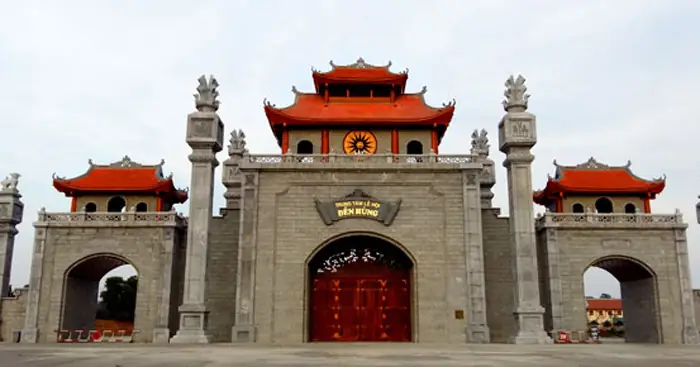
The main celebration center is located at the Hung Kings Temple complex in Nghia Linh Mountain, Phu Tho province. This architectural complex consists of several temples and shrines built across different historical periods, creating a harmonious blend of ancient and more recent Vietnamese architectural styles. The temple complex has been recognized as a National Special Relic and was included in UNESCO’s Representative List of the Intangible Cultural Heritage of Humanity in 2012, acknowledging its importance not just to Vietnam but to global cultural heritage.
Throughout history, the Hung Kings Festival has evolved while maintaining its core essence. Originally a simple ancestral worship ceremony, it has grown into a major national celebration that attracts millions of visitors each year. The festival typically lasts several days, with the main ceremony occurring on the 10th day of the third lunar month. During this time, people from all over Vietnam and the Vietnamese diaspora return to their ancestral homeland to pay their respects, participate in traditional rituals, and celebrate their shared heritage.
Essential Vocabulary and Expressions for Writing About Vietnamese Culture
To write effectively about the Hung Kings Festival in English, you need to master specific vocabulary that accurately conveys Vietnamese cultural concepts. This specialized terminology helps create authentic and informative content that respects the cultural context while remaining accessible to English readers.
Core Festival Terms:
- Ancestral worship (thờ cúng tổ tiên): The practice of honoring deceased family members and national ancestors
- Commemoration ceremony (lễ kỷ niệm): Formal events to remember and honor historical figures
- Traditional offerings (lễ vật truyền thống): Items presented to ancestors during worship ceremonies
- Sacred site (địa điểm linh thiêng): Places considered spiritually significant and worthy of reverence
- National heritage (di sản quốc gia): Cultural assets recognized as important to a nation’s identity
Cultural and Historical Vocabulary:
- Legend (huyền thoại): Traditional stories about historical events or figures, often containing mythical elements
- Mythology (thần thoại): A collection of myths, especially one belonging to a particular religious or cultural tradition
- Dynasty (triều đại): A line of hereditary rulers of a country
- Ancient kingdom (vương quốc cổ đại): Historical state or territory ruled by a king in ancient times
- Cultural preservation (bảo tồn văn hóa): The practice of maintaining and protecting cultural heritage
Ritual and Ceremony Terms:
- Traditional rituals (nghi lễ truyền thống): Established ceremonies following long-standing customs
- Incense offering (thắp hương): The act of burning incense as part of worship or remembrance
- Prayer ceremony (lễ cầu nguyện): Formal religious or spiritual observance involving prayers
- Procession (đoàn diễu hành): An organized march or parade, often ceremonial
- Sacred music (âm nhạc thiêng liêng): Music performed in religious or spiritual contexts
Descriptive and Analytical Terms:
- Cultural significance (ý nghĩa văn hóa): The importance of something within a particular culture
- National identity (danh tính dân tộc): A person’s identity and sense of belonging to a nation
- Historical continuity (tính liên tục lịch sử): The unbroken connection between past and present
- Traditional values (giá trị truyền thống): Beliefs and principles passed down through generations
- Cultural expression (biểu đạt văn hóa): Ways in which a culture communicates its values and beliefs
Useful Phrases for Academic Writing:
- “According to Vietnamese legend…” (Theo truyền thuyết Việt Nam…)
- “The festival serves as a reminder of…” (Lễ hội đóng vai trò nhắc nhở về…)
- “This tradition embodies the concept of…” (Truyền thống này thể hiện khái niệm về…)
- “The ceremony reflects the deep respect for…” (Nghi lễ phản ánh sự kính trọng sâu sắc đối với…)
- “This celebration demonstrates the importance of…” (Lễ kỷ niệm này thể hiện tầm quan trọng của…)
Common English Expressions:
- “Roots and heritage” (cội nguồn và di sản)
- “Ancestral legacy” (di sản tổ tiên)
- “National pride” (niềm tự hào dân tộc)
- “Cultural continuity” (tính liên tục văn hóa)
- “Spiritual connection” (kết nối tinh thần)
- “Historical significance” (ý nghĩa lịch sử)
- “Traditional customs” (phong tục truyền thống)
- “Ceremonial practices” (thực hành nghi lễ)
When writing about the Hung Kings Festival, it’s important to use these terms accurately and consistently. This vocabulary not only helps convey the specific meaning of Vietnamese cultural concepts but also demonstrates your understanding and respect for the subject matter. Incorporating these terms naturally into your writing will make your content more authentic and informative for readers interested in Vietnamese culture and traditions.
Step-by-Step Guide to Writing an English Essay About the Festival
Writing a compelling essay about the Hung Kings Festival requires careful planning and organization. Follow this step-by-step guide to create a well-structured and informative piece that effectively communicates the festival’s significance to English-speaking readers.
Step 1: Research and Information Gathering
Begin by collecting reliable information about the Hung Kings Festival. Use multiple sources including academic articles, official Vietnamese cultural websites, and reputable news sources. Focus on gathering information about:
- The historical background of the Hung Kings
- The festival’s origins and evolution
- Current celebration practices
- Cultural and spiritual significance
- The temple complex and its architecture
Step 2: Create an Outline
Before writing, organize your thoughts into a clear outline. A typical essay structure includes:
- Introduction: Hook, background information, thesis statement
- Body paragraphs: Each focusing on a specific aspect of the festival
- Conclusion: Summary and final thoughts
Step 3: Write the Introduction
Start with an engaging hook that captures the reader’s interest. This could be:
- A striking statistic about festival attendance
- A quote from Vietnamese literature about ancestor worship
- A vivid description of the festival atmosphere
Follow the hook with 2-3 sentences providing background information about the festival. End with a clear thesis statement that outlines what your essay will cover.
Example Introduction Structure:
“Every year, millions of Vietnamese people make a pilgrimage to the northern mountains of their homeland. They come not for tourism, but to honor the legendary founders of their nation. The Hung Kings Festival, celebrated annually on the 10th day of the third lunar month, represents one of Vietnam’s most important cultural traditions. This essay will explore the historical significance, cultural importance, and modern celebration of this ancient festival.”
Step 4: Develop Body Paragraphs
Each body paragraph should focus on a specific aspect of the festival. Use the PEEL structure:
- Point: Start with a clear topic sentence
- Evidence: Provide facts, examples, or quotes
- Explanation: Explain how the evidence supports your point
- Link: Connect back to your main argument
Suggested Body Paragraph Topics:
- Historical background and legendary origins
- Cultural and spiritual significance
- Modern celebration practices and rituals
- The festival’s role in Vietnamese national identity
Step 5: Write Topic Sentences
Each paragraph should begin with a strong topic sentence that clearly states the main idea of that paragraph. For example:
- “The Hung Kings Festival has its roots in ancient Vietnamese mythology and legend.”
- “Beyond its historical importance, the festival holds deep spiritual significance for Vietnamese people.”
- “Modern celebrations combine traditional rituals with contemporary expressions of cultural pride.”
Step 6: Provide Supporting Evidence
Support your points with specific details:
- Historical dates and facts
- Quotes from cultural experts
- Descriptions of specific rituals
- Statistics about participation
- Examples of traditional practices
Step 7: Write the Conclusion
Summarize your main points without introducing new information. Restate your thesis in light of the evidence presented. End with a final thought that leaves a lasting impression on the reader.
Example Conclusion Structure:
“The Hung Kings Festival represents much more than a historical commemoration. It serves as a living bridge between Vietnam’s ancient past and its modern present, connecting generations through shared cultural values and national pride. As Vietnam continues to develop and engage with the global community, this ancient tradition remains a powerful symbol of cultural identity and unity.”
Step 8: Revise and Edit
After completing your first draft:
- Check for logical flow between paragraphs
- Ensure each paragraph has a clear main idea
- Verify that all information is accurate and properly cited
- Look for grammar, spelling, and punctuation errors
- Read your essay aloud to check for clarity and rhythm
Step 9: Add Transitions
Use transitional phrases to create smooth connections between ideas:
- “Furthermore,” “Moreover,” “Additionally” (to add information)
- “However,” “Nevertheless,” “On the other hand” (to show contrast)
- “For example,” “For instance,” “Specifically” (to provide examples)
- “In conclusion,” “To summarize,” “Overall” (to conclude)
Step 10: Final Review
Before submitting your essay, ensure:
- Your thesis statement is clear and supported throughout
- Each paragraph contributes to your overall argument
- Your vocabulary is appropriate for academic writing
- Your tone is objective and informative
- Your essay meets any specific requirements (word count, formatting, etc.)
Following this structured approach will help you create a comprehensive and well-organized essay about the Hung Kings Festival that effectively communicates its cultural and historical significance to English-speaking readers.
Sample Essay: The Hung Kings Festival – Vietnam’s National Heritage
The Hung Kings Festival, known in Vietnamese as Giỗ Tổ Hùng Vương, stands as one of Vietnam’s most significant cultural celebrations. Celebrated annually on the 10th day of the third lunar month, this festival honors the legendary founders of the Vietnamese nation and serves as a powerful symbol of national unity and cultural identity. The celebration combines ancient traditions with modern expressions of patriotism, creating a unique cultural phenomenon that continues to evolve while maintaining its core spiritual significance.
The historical roots of the Hung Kings Festival trace back to ancient Vietnamese mythology and legend. According to traditional Vietnamese history, the Hung Kings were the rulers of Van Lang, the first Vietnamese state, established over 4,000 years ago. The Hung Kings are believed to be descendants of Lac Long Quan (the Dragon Lord) and Au Co (the Fairy), legendary figures who are said to have given birth to 100 children, with the eldest becoming the first Hung King. This mythological origin story represents the foundation of Vietnamese civilization and establishes a divine connection between the Vietnamese people and their ancestors. The festival originally began as a simple ancestral worship ceremony but has evolved into a major national celebration that attracts millions of participants each year.
The cultural and spiritual significance of the Hung Kings Festival extends far beyond mere historical remembrance. The festival embodies the Vietnamese philosophy of “uống nước nhớ nguồn” (drinking water and remembering its source), which emphasizes the importance of honoring one’s ancestors and remembering one’s roots. This concept is deeply embedded in Vietnamese culture and influences many aspects of Vietnamese society, from family values to national pride. The festival serves as a powerful reminder that modern Vietnam stands on the foundation laid by these legendary rulers, creating a sense of historical continuity and national unity among Vietnamese people worldwide.
Có thể bạn quan tâm: Đi Cát Bà Từ Hà Nội Như Thế Nào?
The main celebration center is located at the Hung Kings Temple complex in Nghia Linh Mountain, Phu Tho province, approximately 80 kilometers northwest of Hanoi. This architectural complex consists of several temples and shrines built across different historical periods, creating a harmonious blend of ancient and more recent Vietnamese architectural styles. The temple complex includes the Lower Temple, Middle Temple, Upper Temple, and the Tomb of the Hung Kings, each serving a specific purpose in the worship ceremony. The complex has been recognized as a National Special Relic and was included in UNESCO’s Representative List of the Intangible Cultural Heritage of Humanity in 2012, acknowledging its importance not just to Vietnam but to global cultural heritage.
Modern celebrations of the Hung Kings Festival combine traditional rituals with contemporary expressions of cultural pride. The main ceremony typically begins with a solemn procession carrying offerings to the temple complex. Participants wear traditional Vietnamese clothing, and the atmosphere is filled with incense, traditional music, and the sound of ceremonial drums. The official ceremony includes prayers, incense offerings, and traditional performances such as folk music and dance. After the formal ceremony, the festival transforms into a vibrant cultural celebration featuring traditional games, folk performances, and local food markets. These activities provide opportunities for younger generations to connect with their cultural heritage while creating new memories and experiences.
The Hung Kings Festival plays a crucial role in shaping and maintaining Vietnamese national identity, particularly in an increasingly globalized world. For Vietnamese people living abroad, the festival serves as a powerful connection to their homeland and cultural roots. Many overseas Vietnamese communities organize their own celebrations, demonstrating how this ancient tradition continues to unite Vietnamese people across geographical boundaries. The festival also serves as an important educational tool, teaching younger generations about their history, cultural values, and national heritage. Schools often organize field trips to the festival, and families use the occasion to share stories about their ancestors and family history.
The festival’s significance has grown in recent years as Vietnam has become more integrated into the global community. The Vietnamese government has officially recognized the Hung Kings Festival as a national holiday, and efforts have been made to preserve and promote traditional practices associated with the celebration. This recognition reflects the understanding that cultural heritage plays a vital role in national development and international relations. The festival has also become an important platform for cultural exchange, as visitors from around the world come to experience this unique aspect of Vietnamese culture.
The Hung Kings Festival represents much more than a historical commemoration. It serves as a living bridge between Vietnam’s ancient past and its modern present, connecting generations through shared cultural values and national pride. The festival demonstrates how traditional cultural practices can remain relevant and meaningful in contemporary society while adapting to changing circumstances. As Vietnam continues to develop and engage with the global community, this ancient tradition remains a powerful symbol of cultural identity and unity. The Hung Kings Festival not only honors the legendary founders of the Vietnamese nation but also celebrates the resilience and continuity of Vietnamese culture throughout history.
Descriptive Writing Techniques for Vivid Festival Scenes
To create compelling descriptions of the Hung Kings Festival in English, writers must employ specific techniques that bring the sensory experience to life for readers. Descriptive writing about cultural events requires attention to detail, rich vocabulary, and the ability to convey both the visual spectacle and the emotional atmosphere of the celebration.
Sensory Details and Imagery
Begin by engaging all five senses to create a complete picture of the festival experience. Instead of simply stating facts, use descriptive language that allows readers to see, hear, smell, touch, and even taste the festival atmosphere.
Visual Descriptions:
“The temple complex glows with thousands of flickering candles, their golden light reflecting off the ancient bronze bells hanging from the temple eaves. Colorful banners bearing traditional Vietnamese symbols flutter in the gentle spring breeze, while the intricate carvings on the temple walls tell stories of ancient kings and legendary heroes.”
Auditory Descriptions:
“The air resonates with the deep, rhythmic beat of ceremonial drums, punctuated by the high-pitched melodies of traditional flutes. The soft chanting of prayers mingles with the rustling of silk clothing and the gentle clinking of offering bells, creating a symphony of sounds that has echoed through these mountains for centuries.”
Olfactory Descriptions:
“The sweet, woody scent of burning incense fills the air, mingling with the aroma of fresh flowers and traditional Vietnamese foods being prepared nearby. The fragrance of lotus blossoms and jasmine creates a heady atmosphere that seems to transport visitors back in time.”
Tactile Descriptions:
“The smooth, cool surface of ancient stone steps leads up the mountain path, worn smooth by generations of bare feet and sandals. The rough texture of traditional woven baskets contrasts with the soft silk of ceremonial robes, while the warmth of the spring sun provides a gentle backdrop to the cool mountain air.”
Use of Figurative Language
Incorporate metaphors, similes, and personification to add depth and emotional resonance to your descriptions.
Metaphors:
“The temple complex stands as a crown upon the mountain, its golden roofs catching the morning light like precious jewels. The festival becomes a living tapestry, weaving together threads of ancient tradition and modern celebration.”
Similes:
“The procession moves like a colorful river flowing up the mountain path, with participants dressed in vibrant traditional clothing. The sound of temple bells rings like clear water droplets falling into a still pond, each note creating ripples of peace and reverence.”
Personification:
“The ancient trees seem to bow their heads in reverence as the procession passes, their branches swaying gently in the breeze. The mountain itself appears to hold its breath during the solemn moments of the ceremony, as if sharing in the collective memory of the people.”
Specific Details and Concrete Examples
Use precise, concrete details rather than vague generalizations to create vivid mental images.
Instead of: “There are many people at the festival.”
Write: “Thousands of pilgrims in traditional ao dai and non la hats make their way up the winding mountain path, their faces illuminated by the warm glow of paper lanterns.”
Instead of: “The temple is beautiful.”
Write: “The temple’s curved roof tiles, glazed in traditional green and yellow, create a mosaic pattern against the blue spring sky, while intricate dragon carvings guard the entrance with fierce determination.”
Temporal Descriptions and Sequence
Describe the progression of events to create a sense of movement and time passing.
Opening the Scene:
“As the first rays of dawn break over the mountain peaks, the temple complex begins to stir with quiet activity. Early risers carefully arrange offerings of fresh fruit, sticky rice cakes, and fragrant flowers at the temple entrance, their movements precise and reverent.”
Building the Atmosphere:
“With each passing hour, the mountain path becomes more crowded with pilgrims arriving from distant provinces. The air grows thick with anticipation as traditional musicians begin tuning their instruments, their melodies floating down the mountain like a gentle breeze.”
Climactic Moments:
“At exactly noon, the ceremonial drums begin their steady, heartbeat-like rhythm, signaling the start of the main ceremony. The entire mountain seems to pause as thousands of voices join in prayer, creating a moment of profound unity and spiritual connection.”
Varying Sentence Structure
Use a mix of sentence lengths and structures to create rhythm and maintain reader interest.
Short, impactful sentences for emphasis:
“The moment is sacred. The mountain is silent. The spirits are present.”
Longer, flowing sentences for description:
“The procession winds its way up the ancient stone steps, a colorful ribbon of tradition and faith that connects the present with the distant past, carrying with it the hopes and prayers of a nation.”
Dialogue and Quotes
Incorporate authentic dialogue or quotes to add realism and cultural authenticity.
Traditional phrases:
“Con cháu nhớ ơn Tổ tiên” (We, your descendants, remember our ancestors) – commonly heard during the ceremony.
Descriptive quotes:
“‘This is more than just a festival,’ explains elderly participant Nguyen Thi Lan. ‘It’s our way of saying thank you to those who gave us our land, our culture, and our identity.'”
Cultural Context and Symbolism
Explain the meaning behind what you’re describing to help readers understand the deeper significance.
Symbolic elements:
“The five-tiered incense burner represents the five elements of Vietnamese philosophy, while the dragon statues symbolize power and protection. Each offering placed at the altar carries specific meaning – the sticky rice cakes represent abundance, the flowers symbolize the beauty of life, and the incense carries prayers to the spirit world.”
Có thể bạn quan tâm: Hướng Dẫn Chi Tiết Cách Nấu Lẩu Riêu Cua Bắp Bò Lò Đúc Thơm Ngon Chuẩn Vị
By employing these descriptive writing techniques, you can create vivid, engaging descriptions of the Hung Kings Festival that transport readers to the mountain temple complex and allow them to experience the spiritual and cultural significance of this ancient celebration. The key is to balance sensory details with cultural context, creating a rich tapestry of words that captures both the external beauty and internal meaning of the festival.
Comparative Analysis: Hung Kings Festival and Other World Ancestral Celebrations
The Hung Kings Festival shares remarkable similarities with ancestral celebration traditions found across various cultures worldwide, while maintaining unique characteristics that reflect Vietnam’s specific historical and cultural context. By examining these global parallels, we can better understand both the universal human need to honor ancestors and the distinctive features that make each tradition special.
Similarities with Chinese Qingming Festival
The Chinese Qingming Festival, also known as Tomb-Sweeping Day, bears striking similarities to the Hung Kings Festival. Both celebrations occur in spring and involve visiting ancestral graves or sacred sites to pay respects. During Qingming, families clean ancestral tombs, offer food and incense, and participate in traditional activities. Similarly, the Hung Kings Festival involves cleaning and decorating the temple complex, making offerings, and engaging in traditional rituals. Both festivals emphasize the Confucian value of filial piety and the importance of maintaining connections with one’s ancestors.
However, key differences exist. While Qingming focuses primarily on family ancestors, the Hung Kings Festival honors national founders. Qingming is more widely celebrated across China with individual family visits to gravesites, whereas the Hung Kings Festival centers around a specific national pilgrimage site. The Vietnamese celebration also incorporates more elaborate state-sponsored ceremonies and larger-scale public festivities.
Parallels with Mexican Day of the Dead
Mexico’s Día de los Muertos (Day of the Dead) shares the Hung Kings Festival’s emphasis on joyful remembrance rather than mourning. Both celebrations view death as a natural part of life’s cycle and believe that the spirits of ancestors return to visit their living relatives during these special times. Elaborate altars, traditional foods, and vibrant decorations characterize both festivals, creating an atmosphere of celebration rather than sorrow.
The Day of the Dead typically involves creating colorful ofrendas (offerings) in homes, complete with photos, favorite foods, and personal items of deceased loved ones. Similarly, the Hung Kings Festival features elaborate offerings at the temple complex. However, while Day of the Dead focuses on individual family remembrance, the Hung Kings Festival maintains a more collective, national character, honoring legendary figures rather than personal ancestors.
Connections with Korean Charye Ceremony
Korean ancestral rites, particularly the Charye ceremony performed during major holidays like Chuseok (Korean Thanksgiving), demonstrate another parallel. Like the Hung Kings Festival, Korean ancestral ceremonies involve specific rituals, traditional foods, and formal prayers. Both traditions emphasize the importance of proper etiquette and respectful behavior when honoring ancestors.
The Korean tradition typically takes place in family homes or ancestral homes, with multiple generations participating in the ceremony. This contrasts with the Hung Kings Festival’s focus on a central pilgrimage site. However, both share the concept of maintaining spiritual connections with ancestors through regular, structured rituals that reinforce family and cultural bonds.
Comparisons with Japanese Obon Festival
Japan’s Obon Festival, held in mid-August, represents another fascinating comparison. Obon is based on the Buddhist belief that ancestral spirits return to visit their families during this time. The festival includes cleaning family graves, making offerings, and performing traditional dances called Bon Odori. Like the Hung Kings Festival, Obon emphasizes the cyclical nature of life and death and the ongoing relationship between the living and the dead.
Obon’s lantern-floating ceremonies (Toro Nagashi) bear symbolic similarity to the lighting of incense and candles during the Hung Kings Festival, both serving to guide and honor ancestral spirits. However, Obon tends to be more localized, with celebrations occurring in communities across Japan, while the Hung Kings Festival centers around a specific national site.
Universal Themes and Cultural Distinctions
These comparisons reveal several universal themes in ancestral celebrations across cultures:
- The importance of maintaining spiritual connections with ancestors
- The use of food, incense, and traditional items as offerings
- The incorporation of music, dance, and ceremonial activities
- The emphasis on family and community participation
- The belief in an ongoing relationship between the living and the dead
However, each tradition also reflects its unique cultural context. The Hung Kings Festival stands out for its national character, honoring legendary founders rather than individual family ancestors. It also demonstrates Vietnam’s unique blend of indigenous beliefs, Confucian values, and Buddhist influences. The festival’s location at a specific mountain temple complex creates a powerful sense of pilgrimage and national unity that distinguishes it from more localized ancestral celebrations.
Modern Adaptations and Global Relevance
In today’s globalized world, these ancestral celebration traditions face both challenges and opportunities. Urbanization, migration, and changing lifestyles can make it difficult to maintain traditional practices. However, there’s also growing interest in cultural heritage and the psychological benefits of maintaining connections with one’s roots.
The Hung Kings Festival, like other ancestral celebrations, has adapted to modern times while preserving its core essence. Live streaming of ceremonies, social media sharing of festival experiences, and educational programs in schools help ensure that younger generations remain connected to their cultural heritage. These adaptations demonstrate how ancient traditions can remain relevant and meaningful in contemporary society while serving as bridges between past and present, local and global.
Understanding these global parallels not only enriches our appreciation of the Hung Kings Festival but also highlights the shared human experience of honoring ancestors and maintaining cultural continuity across generations.
Common Mistakes to Avoid When Writing About Vietnamese Culture
When writing about the Hung Kings Festival or any aspect of Vietnamese culture in English, students and writers often make certain mistakes that can undermine the accuracy and respectfulness of their work. Being aware of these common pitfalls can help you create more authentic and culturally sensitive content.
Mistake 1: Overgeneralization and Stereotyping
One of the most frequent errors is making broad generalizations about Vietnamese culture based on limited information about the Hung Kings Festival. Writers sometimes assume that practices or beliefs associated with this specific festival apply to all aspects of Vietnamese life.
Incorrect: “All Vietnamese people are very superstitious and believe in many spirits.”
Correct: “The Hung Kings Festival reflects the Vietnamese tradition of ancestral veneration, which plays an important role in many Vietnamese families’ spiritual practices.”
Solution: Be specific about which aspects of Vietnamese culture you’re discussing and avoid making sweeping statements about the entire population. Vietnam is a diverse country with regional variations in customs and beliefs.
Mistake 2: Using Outdated or Colonial Language
Some writers unintentionally use language that reflects outdated colonial perspectives or reinforces negative stereotypes about Vietnamese culture.
Incorrect: “The Vietnamese have primitive rituals involving burning incense and making offerings to spirits.”
Correct: “The Hung Kings Festival includes traditional rituals such as incense burning and offerings, which are important expressions of Vietnamese cultural and spiritual values.”
Solution: Use respectful, contemporary language that acknowledges the sophistication and complexity of Vietnamese cultural practices. Avoid terms that suggest backwardness or primitiveness.
Mistake 3: Confusing Legend with Historical Fact
The Hung Kings Festival is based on a combination of historical events and legendary stories. Writers sometimes present legendary elements as established historical fact or dismiss the entire festival as mere mythology.
![Viết Về Lễ Hội Đền Hùng Bằng Tiếng Anh [có Dịch] - Step Up English](https://buulong.com.vn/wp-content/uploads/2025/12/viet-ve-le-hoi-vua-hung-bang-tieng-anh-98c7b8.webp "Viết Về Lễ Hội Đền Hùng Bằng Tiếng Anh [có Dịch] - Step Up English")
Có thể bạn quan tâm: Thơ Chúc Mừng Sinh Nhật Ngắn Gọn – Sưu Tầm Và Gợi Ý
Incorrect: “The Hung Kings were real historical figures who ruled Vietnam exactly as described in the legends.”
Correct: “According to Vietnamese legend, the Hung Kings founded the first Vietnamese state, and while the historical accuracy of these stories may be debated, their cultural significance remains profound.”
Solution: Distinguish between historical facts and legendary traditions. Acknowledge that many cultures have origin stories that blend history with mythology, and that these stories hold cultural value regardless of their historical accuracy.
Mistake 4: Ignoring Regional and Historical Context
Vietnam has a long and complex history with regional variations in customs and practices. Writers sometimes present the Hung Kings Festival as if it has always been celebrated in exactly the same way throughout Vietnamese history.
Incorrect: “The Hung Kings Festival has been celebrated exactly the same way for 4,000 years.”
Correct: “The Hung Kings Festival has evolved over centuries, with traditions adapting to changing social, political, and cultural circumstances while maintaining core elements of ancestral veneration.”
Solution: Acknowledge the historical evolution of cultural practices and the diversity within Vietnamese culture. Research how the festival has changed over time and varies across different regions.
Mistake 5: Overemphasis on Exoticism
Some writers focus excessively on the “exotic” or unusual aspects of the festival, which can create a sense of otherness and fail to recognize the universal human elements of the celebration.
Incorrect: “The Hung Kings Festival is a strange and mysterious celebration where people burn strange-smelling sticks and bow to ancient statues.”
Correct: “The Hung Kings Festival is a meaningful celebration that brings families and communities together to honor their heritage, similar to how other cultures celebrate their own historical and cultural traditions.”
Solution: Focus on the human and emotional aspects of the festival that readers from any culture can relate to, such as family bonds, remembrance of ancestors, and community gathering.
Mistake 6: Incorrect Use of Vietnamese Terms
Mispronouncing or misusing Vietnamese words and phrases can undermine the credibility of your writing and show a lack of respect for the language.
Incorrect: “The festival is called ‘Gio To Hung Vuong’ and involves many ‘rituals’ and ‘ceremonies.'”
Correct: “The festival is called Giỗ Tổ Hùng Vương (pronounced approximately ‘Yoh Zo Hung Voen’) and involves traditional rituals and ceremonies.”
Solution: When using Vietnamese terms, make sure to use the correct spelling with proper diacritical marks when possible, and consider providing pronunciation guides for difficult words. Use Vietnamese terms sparingly and appropriately, ensuring they add value to your writing rather than appearing as mere decoration.
Mistake 7: Lack of Cultural Context
Writing about the festival without explaining its broader cultural context can leave readers confused about its significance.
Incorrect: “People go to a mountain and burn incense.”
Correct: “The festival takes place at a sacred mountain temple complex that represents the spiritual heart of Vietnamese culture. Burning incense is a traditional practice that symbolizes prayers rising to the ancestors and creates a respectful atmosphere for remembrance.”
Solution: Always provide sufficient cultural context to help readers understand the meaning and significance of what you’re describing. Explain the symbolism and cultural values behind specific practices.
Mistake 8: Presenting Culture as Static
Some writers present Vietnamese culture as unchanging and frozen in time, which fails to acknowledge the dynamic nature of all living cultures.
Incorrect: “Vietnamese culture has remained exactly the same for thousands of years.”
Correct: “While the Hung Kings Festival maintains important traditional elements, it has also adapted to modern times, incorporating new technologies and responding to contemporary social changes while preserving its core cultural values.”
Solution: Acknowledge that all cultures are dynamic and constantly evolving. Discuss how traditional practices adapt to modern contexts while maintaining their essential character.
By avoiding these common mistakes, you can write about the Hung Kings Festival and Vietnamese culture with greater accuracy, respect, and cultural sensitivity. This approach not only produces better writing but also demonstrates genuine appreciation for the richness and complexity of Vietnamese cultural heritage.
Research Resources and Reliable Sources for Festival Information
When writing about the Hung Kings Festival in English, accessing reliable and authoritative sources is crucial for creating accurate and credible content. The quality of your research directly impacts the quality of your writing, so it’s important to know which sources are most trustworthy and how to use them effectively.
Official Vietnamese Government Sources
The most authoritative information about the Hung Kings Festival comes from official Vietnamese government websites and cultural institutions. These sources provide accurate historical information, official celebration details, and current cultural policies.
Key Government Websites:
- Ministry of Culture, Sports and Tourism Vietnam (mocst.gov.vn): Offers official information about cultural heritage sites, including the Hung Kings Temple complex, and details about national cultural policies and celebrations.
- Vietnam National Administration of Tourism (vietnamtourism.gov.vn): Provides information about the festival as a cultural tourism destination, including visitor statistics and travel information.
- Phu Tho Provincial People’s Committee (phutho.gov.vn): Offers local information about the festival, including specific details about celebration activities and regional cultural context.
Academic and Educational Institutions
Universities and research institutions in Vietnam and internationally have conducted extensive research on Vietnamese culture and the Hung Kings Festival. These sources provide scholarly analysis and historical context.
Recommended Academic Sources:
- Vietnam National University (vnu.edu.vn): The main university system in Vietnam, with faculties of history, culture, and social sciences that have published research on Vietnamese cultural traditions.
- Academy of Social Sciences Vietnam (vass.gov.vn): A leading research institution that publishes scholarly works on Vietnamese history, culture, and society.
- JSTOR (jstor.org): An online database containing academic articles and research papers on Vietnamese culture and history, including studies of the Hung Kings Festival.
- Project MUSE (muse.jhu.edu): Another academic database with peer-reviewed articles on Southeast Asian studies and Vietnamese cultural topics.
International Cultural Organizations
Global cultural organizations provide valuable perspectives on the Hung Kings Festival, particularly regarding its recognition as intangible cultural heritage.
UNESCO Resources:
- UNESCO Intangible Cultural Heritage Lists: The Hung Kings Festival was inscribed on UNESCO’s Representative List of the Intangible Cultural Heritage of Humanity in 2012. The UNESCO website provides detailed information about the festival’s cultural significance and the criteria for its inclusion.
- UNESCO Digital Library: Contains reports and documentation related to the festival’s nomination and ongoing preservation efforts.
Library and Archival Resources
National and university libraries often have extensive collections of materials related to Vietnamese culture and the Hung Kings Festival.
Recommended Libraries:
- National Library of Vietnam (nlv.gov.vn): The largest library in Vietnam, with extensive collections of historical documents, photographs, and research materials related to Vietnamese culture.
- Library of Congress (loc.gov): The U.S. national library, which has significant collections of materials related to Vietnamese history and culture.
- British Library (bl.uk): Holds important historical documents related to Vietnam and Southeast Asia.
News and Media Sources
Reputable news organizations provide up-to-date information about the festival, including coverage of recent celebrations and any changes in celebration practices.
Trusted News Sources:
- Vietnam News (vietnamnews.vn): The official English-language newspaper of Vietnam, providing current information about cultural events and government policies.
- VnExpress International (vnexpress.net/english): A popular Vietnamese news website with an English section that covers cultural events and national celebrations.
- BBC News Asia (bbc.com/news/world/asia): Provides international perspective on Vietnamese cultural events and their global significance.
Books and Published Research
Scholarly books and publications offer in-depth analysis and comprehensive information about the Hung Kings Festival and Vietnamese culture.
Recommended Authors and Publications:
- Keith Weller Taylor: “The Birth of Vietnam” – Provides historical context for understanding Vietnam’s ancient kingdoms and cultural development.
- Nguyen Van Huy: Various works on Vietnamese cultural traditions and festivals.
- David G. Marr: “Vietnamese Tradition on Trial, 1920-1945” – Offers insights into how traditional Vietnamese culture, including ancestral worship, has been viewed and adapted over time.
Online Databases and Research Tools
Digital research platforms provide access to a wide range of academic and professional sources.
Useful Research Platforms:
- Google Scholar (scholar.google.com): A freely accessible search engine that indexes the full text of scholarly literature across many disciplines and sources.
- ResearchGate (researchgate.net): A social networking site for scientists and researchers to share papers, ask and answer questions, and find collaborators.
- Academia.edu (academia.edu): A platform for academics to share research papers, including many works on Vietnamese culture and history.
Tips for Evaluating Source Reliability
When selecting sources for your research, consider the following criteria:
- Authority: Is the source written by recognized experts or official organizations?
- Accuracy: Does the information appear to be factually correct and well-researched?
- Currency: Is the information up-to-date and relevant to current understanding?
- Objectivity: Does the source present information in a balanced and unbiased manner?
- Coverage: Does the source provide comprehensive information about the topic?
Citation and Referencing
Always properly cite your sources using appropriate academic citation styles (APA, MLA, Chicago, etc.). This not only gives credit to original authors but also enhances the credibility of your work. Keep detailed records of all
Cập Nhật Lúc Tháng 12 28, 2025 by Hà Thu